Season 1 Best — True Detective

is the "average Joe"—a family man who clings to traditional structures of morality while simultaneously undermining them through infidelity and hypocrisy. Harrelson provides the perfect foil, grounding Rust’s high-concept monologues with a gritty, frustrated realism. Atmosphere and Aesthetic: The Louisiana Gothic

You cannot talk about Season 1 without mentioning the end of Episode 4, "Who Goes There." The six-minute, single-take tracking shot through a housing project during a raid is one of the most technically impressive feats in television history. It remains a high-water mark for tension and choreography. 5. Time as a "Flat Circle"

However, creator Nic Pizzolatto has noted that some fans may have missed the point of Rust's philosophy. . This reading recontextualizes Rust's entire arc. He isn't a prophet of despair; he is a broken shepherd, "choking on all that is bitter and ugly in the world," struggling to find the strength to continue. His famous near-death experience and final shift in perspective at the end of the season, where he declares that "the light is winning," isn't a conversion to Christianity but a "broadening of perspective" — a first, tentative step out of the heart of darkness.

Their chemistry, a mix of intense respect and mutual contempt, drives the narrative, especially as Hart’s infidelity threatens his family life. 3. Themes: Philosophy, Nihilism, and the Occult True Detective Season 1

in 2014, it was more than just a crime drama; it was a cultural shift that redefined the "prestige TV" landscape. By blending hard-boiled noir with Southern Gothic dread and existential philosophy, creator Nic Pizzolatto and director Cary Joji Fukunaga crafted a "lightning in a bottle" experience that many fans believe remains unsurpassed in television history. 1. The Alchemy of Rust and Marty

If you’d like to see how the other seasons stack up, I can provide a breakdown of how and Season 3 changed the show's formula.

On Metacritic, it has a score of , indicating universal acclaim. IMDb users rate it 8.9/10 , and in China, it boasts a 9.3/10 on Douban . It received numerous award nominations, including Primetime Emmy nominations for Outstanding Drama Series, Outstanding Lead Actor for McConaughey, and Outstanding Supporting Actor for Harrelson. is the "average Joe"—a family man who clings

Writer Nic Pizzolatto infused the procedural format with elements of and cosmic horror . By referencing Robert W. Chambers’ The King in Yellow and the mythical city of "Carcosa," the show elevated a standard serial killer hunt into something metaphysical.

If you want to explore the world of prestige television further,

Its tension between mysticism and realism, between spectacle and intellect, continues to motivate debates: Is this a detective story or a philosophical treatise? Is Rust a sage or a nihilist? Do the visuals romanticize decay or indict it? It remains a high-water mark for tension and choreography

True Detective Season 1 succeeded because it understood that the mystery was merely a crucible. The case was simply the vessel used to burn away the facades of its characters, leaving behind a raw, human meditation on grief, companionship, and the eternal struggle between light and dark. It remains a flawless monument of television history—a lightning-in-a-bottle masterpiece that has never been replicated.

Woody Harrelson's Martin "Marty" Hart serves as the perfect foil to Rust's cosmic pessimism. Where Rust is otherworldly and cerebral, Marty is a "regular type dude" who sees himself as a family man and a standard, effective police officer. But Marty is a hypocrite of the highest order. He preaches the importance of family while having a mistress on the side, and his worldview is built on a deep-seated misogyny and a quickness to anger and violence. He feels a sense of ownership over the women in his life, leading to a violent confrontation with his mistress when he sees her with another man.

Dissect the literary origins of and weird fiction. Share public link

Fukunaga's direction is a masterclass in visual storytelling. He utilized the languid, ominous landscapes of Louisiana to create a palpable sense of dread and decay. His signature achievement is the in Episode 4, "Who Goes There." The sequence, which follows Rust as he navigates a chaotic and violent biker gang shootout in one continuous, unbroken take, is widely considered one of the most impressive technical feats in TV history.

True Detective Season 1: Real Life Crime Inspiration Explained

Same Buttons

New Tricks

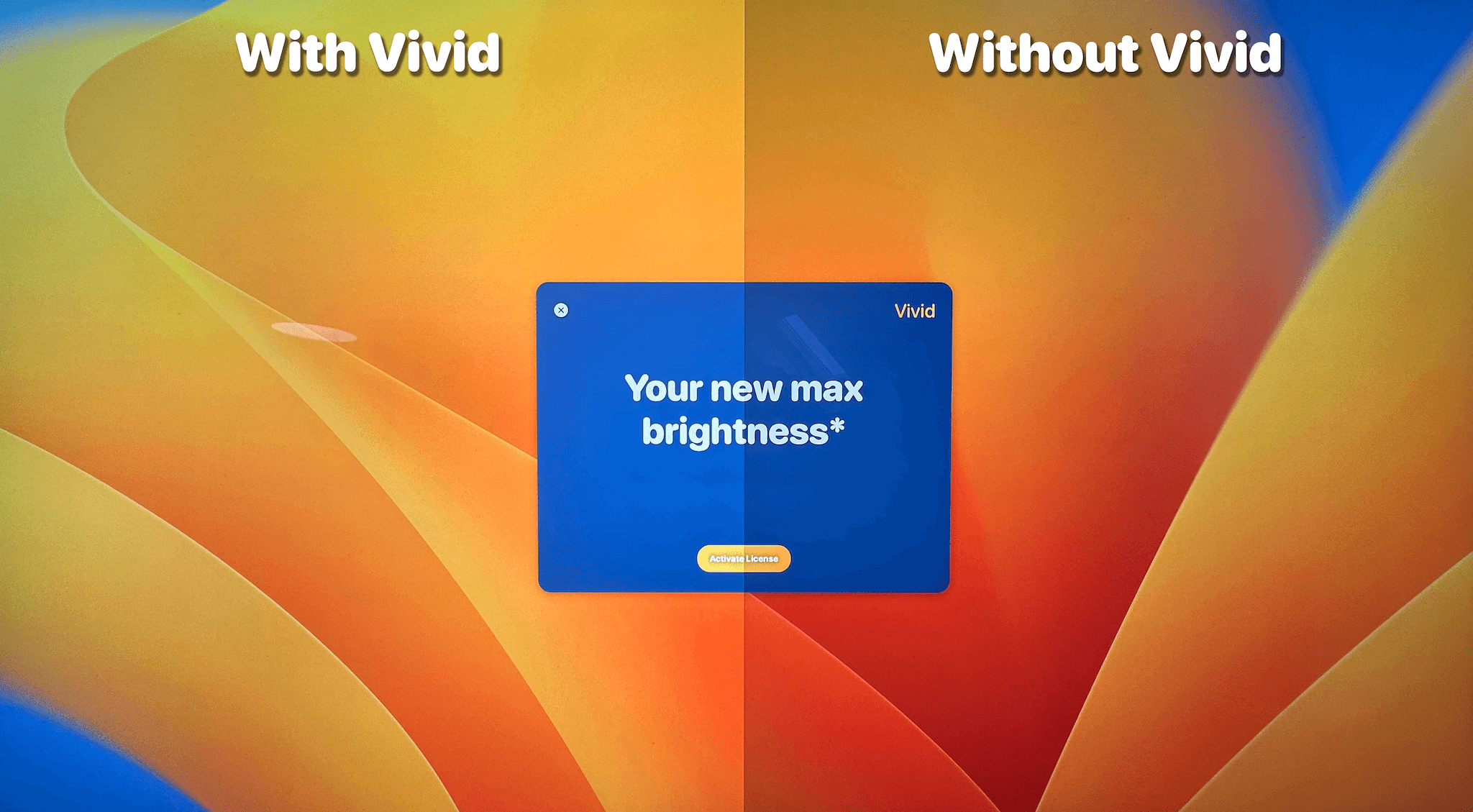
No new shortcuts to remember. Your brightness keys now go twice as bright as before. Simple as that.

Take your MacBook

into the 🔆 Sunshine

Work outdoors with ease. Vivid's extra brightness makes your screen clear and easy to see, even in the brightest sunshine.

The Vivid effect is impressive
ars technica

Not convinced yet?

Try it for free in Splitscreen Mode

You can try Vivid in Splitscreen Mode™ for free for as long as you want. See if it works for your workflow before you consider purchasing a lifetime license.

Try Vivid Now
App screenshot

Used by the Brightest Companies

nasa OpenAI icon meta_line

YouTube Reviews

You have to see Vivid to believe it. Luckily these lovely people have made some great reviews about Vivid. Give them a look (and like and subscribe while you're there!)

Pay once, use forever

Vivid is a one-time purchase, no subscription. You get all the features in every plan.

Single License

€ 10

Use Vivid on your personal devices

  • One time purchase
Buy Single License

Team License

€ 40

Brighten the displays of your team.

  • Use for up to 5 different devices
  • Just € 8 / device
  • One time purchase
Buy Team License

Company License

€ 60

Brighten the displays of your company.

  • Use for up to 10 different devices
  • Just € 6 / device
  • One time purchase
Buy Company License

Requires MacBook Pro 14 or 16 inch with M-Series Pro/Max or Pro Display XDR

is the "average Joe"—a family man who clings to traditional structures of morality while simultaneously undermining them through infidelity and hypocrisy. Harrelson provides the perfect foil, grounding Rust’s high-concept monologues with a gritty, frustrated realism. Atmosphere and Aesthetic: The Louisiana Gothic

You cannot talk about Season 1 without mentioning the end of Episode 4, "Who Goes There." The six-minute, single-take tracking shot through a housing project during a raid is one of the most technically impressive feats in television history. It remains a high-water mark for tension and choreography. 5. Time as a "Flat Circle"

However, creator Nic Pizzolatto has noted that some fans may have missed the point of Rust's philosophy. . This reading recontextualizes Rust's entire arc. He isn't a prophet of despair; he is a broken shepherd, "choking on all that is bitter and ugly in the world," struggling to find the strength to continue. His famous near-death experience and final shift in perspective at the end of the season, where he declares that "the light is winning," isn't a conversion to Christianity but a "broadening of perspective" — a first, tentative step out of the heart of darkness.

Their chemistry, a mix of intense respect and mutual contempt, drives the narrative, especially as Hart’s infidelity threatens his family life. 3. Themes: Philosophy, Nihilism, and the Occult

in 2014, it was more than just a crime drama; it was a cultural shift that redefined the "prestige TV" landscape. By blending hard-boiled noir with Southern Gothic dread and existential philosophy, creator Nic Pizzolatto and director Cary Joji Fukunaga crafted a "lightning in a bottle" experience that many fans believe remains unsurpassed in television history. 1. The Alchemy of Rust and Marty

If you’d like to see how the other seasons stack up, I can provide a breakdown of how and Season 3 changed the show's formula.

On Metacritic, it has a score of , indicating universal acclaim. IMDb users rate it 8.9/10 , and in China, it boasts a 9.3/10 on Douban . It received numerous award nominations, including Primetime Emmy nominations for Outstanding Drama Series, Outstanding Lead Actor for McConaughey, and Outstanding Supporting Actor for Harrelson.

Writer Nic Pizzolatto infused the procedural format with elements of and cosmic horror . By referencing Robert W. Chambers’ The King in Yellow and the mythical city of "Carcosa," the show elevated a standard serial killer hunt into something metaphysical.

If you want to explore the world of prestige television further,

Its tension between mysticism and realism, between spectacle and intellect, continues to motivate debates: Is this a detective story or a philosophical treatise? Is Rust a sage or a nihilist? Do the visuals romanticize decay or indict it?

True Detective Season 1 succeeded because it understood that the mystery was merely a crucible. The case was simply the vessel used to burn away the facades of its characters, leaving behind a raw, human meditation on grief, companionship, and the eternal struggle between light and dark. It remains a flawless monument of television history—a lightning-in-a-bottle masterpiece that has never been replicated.

Woody Harrelson's Martin "Marty" Hart serves as the perfect foil to Rust's cosmic pessimism. Where Rust is otherworldly and cerebral, Marty is a "regular type dude" who sees himself as a family man and a standard, effective police officer. But Marty is a hypocrite of the highest order. He preaches the importance of family while having a mistress on the side, and his worldview is built on a deep-seated misogyny and a quickness to anger and violence. He feels a sense of ownership over the women in his life, leading to a violent confrontation with his mistress when he sees her with another man.

Dissect the literary origins of and weird fiction. Share public link

Fukunaga's direction is a masterclass in visual storytelling. He utilized the languid, ominous landscapes of Louisiana to create a palpable sense of dread and decay. His signature achievement is the in Episode 4, "Who Goes There." The sequence, which follows Rust as he navigates a chaotic and violent biker gang shootout in one continuous, unbroken take, is widely considered one of the most impressive technical feats in TV history.

True Detective Season 1: Real Life Crime Inspiration Explained